
 Available in US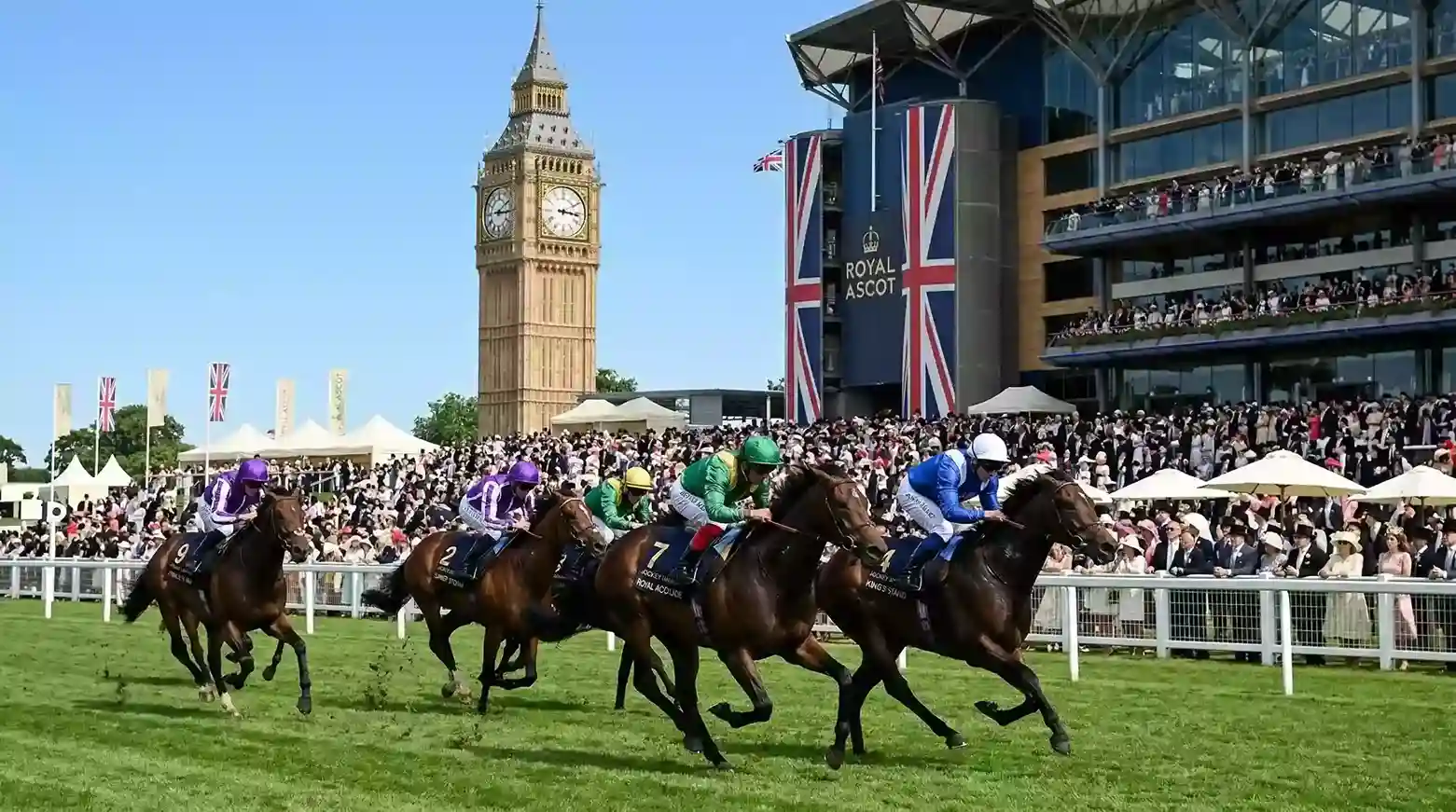
Where class meets chaos. Royal Ascot combines Flat racing’s most prestigious Group races with some of the season’s most competitive handicaps—five days where elite champions and cavalry-charge handicappers share the same card. The meeting contributes significantly to British racing’s record prize money of £194.7 million, attracting the best horses from Europe, America, Australia, and beyond.
For punters, Royal Ascot presents distinct challenges. Group races feature small fields of proven performers where form analysis produces reliable conclusions. Big-field handicaps throw 20 or more runners together, creating lottery-like conditions where luck, draw, and in-running position determine outcomes as much as ability. Understanding how to approach each race type—and recognising which factors matter most at Ascot specifically—separates profitable Royal weeks from expensive ones.
Royal Ascot Structure: Five Days of Flat Excellence
Royal Ascot runs from Tuesday through Saturday in mid-June, featuring 35 races across the five days. Each day follows a similar pattern: a prestigious Group race headlines the card, supported by competitive handicaps and conditions races. The meeting’s structure creates rhythm—major events generate excitement while supporting races offer betting variety.
Tuesday opens with the Queen Anne Stakes, a Group 1 mile that sets the meeting’s tone. Wednesday features the Prince of Wales’s Stakes over ten furlongs. Thursday—traditionally Ladies’ Day—brings the Gold Cup, staying racing’s championship event. Friday’s Coronation Stakes showcases three-year-old fillies. Saturday concludes with the Diamond Jubilee Stakes, a Group 1 sprint.
Between these headline acts, the Royal Hunt Cup, Wokingham Stakes, and other heritage handicaps attract huge fields. These races carry significant prize money yet remain open to horses of moderate ability—creating opportunities for shrewd punters to find value among horses overlooked by markets focused on the big names.
Ground conditions typically favour fast ground. June’s dry weather usually produces good or good-to-firm going, though rain can transform the meeting. Horses needing cut in the ground often struggle; those bred for speed on fast surfaces thrive. Monitor forecasts throughout the week because conditions can shift between days.
International runners add complexity. American turf specialists, French raiders, and Australian sprinters contest major races alongside British and Irish challengers. Assessing form across jurisdictions requires understanding different racing styles—American turf horses face different pace scenarios; French horses might find Ascot’s demands unfamiliar.
Royal Ascot Betting — More on this topic at horse racing betting tips.
Group Races vs Big-Field Handicaps
Group races and handicaps demand fundamentally different approaches. Understanding these distinctions prevents applying inappropriate strategies to each race type.
Group races feature small fields—often 8-12 runners—of horses with established form profiles. Each runner’s ability is documented through multiple performances at similar levels. Form analysis produces reliable assessments because evidence exists for comparison. The challenge lies not in identifying quality but in determining relative merit among proven performers.
Favourites win Group races more frequently than handicaps because class tells over short fields on fair ground. Market leaders rarely exceed 3/1 in prestige events; genuine surprises remain rare. Value in Group races comes from identifying horses whose form others undervalue—perhaps one whose last run came on unsuitable ground, or whose price reflects outdated perception rather than current ability.
Big-field handicaps invert these dynamics. The average Flat field in 2025 runs at 8.9 runners, but Royal Ascot handicaps regularly attract 20 or more. Cavalry-charge conditions mean traffic problems, blocked runs, and positional luck determine outcomes alongside ability. A horse with insufficient room to challenge might be beaten without testing its merits.
Each-way betting suits handicaps better than Group races. When 20 runners compete for four or five places, generous place terms offer genuine value on mid-priced selections. Horses at 16/1 who place return 4/1 on the place portion—worthwhile even without winning. In Group races with eight runners paying three places, the mathematics work less favourably.
Handicap analysis requires weighing draw, pace, and position alongside form. A well-handicapped horse drawn badly might have no chance; a modest horse in the right spot at the right time might steal a place. Accept that handicap results contain randomness that Group races largely eliminate.
See also Horse Racing Betting for Beginners UK.
Draw Bias at Ascot
Ascot’s draw bias varies by distance and ground conditions. Understanding these patterns identifies horses advantaged or disadvantaged before the race begins.
Sprint races over five and six furlongs typically favour high draws on the stands’ side. Runners drawn high can race on the fresh ground against the far rail, while low draws must either cross the track early—expending energy—or race isolated on the unfavoured side. When ground turns soft, the rail sometimes offers better footing, amplifying the high-draw advantage.
The straight mile presents different dynamics. At full capacity fields, the draw splits runners into groups—high numbers racing stands’ side, low numbers against the far rail. Whichever group produces the winner often sweeps the frame, leaving the other group’s runners struggling despite competitive performances within their group. Identifying which side is favoured—through earlier races on the card or historical patterns—provides edge.
Round-course races over longer distances reduce draw significance. Horses have time to find position, jockeys can navigate traffic, and stamina matters more than initial placement. The Gold Cup over two and a half miles on the round course presents minimal draw bias—ability and stamina determine outcomes.
Track bias compounds draw effects. If the rail rides faster—or slower—than central positions, horses drawn to use that strip gain advantage. Watch early races to identify whether any track bias is developing, then adjust draw assessments for later handicaps accordingly.
Form Lines That Matter
Specific trials predict Royal Ascot success more reliably than general form. Identifying these form lines focuses analysis on relevant evidence.
Newmarket’s Guineas meeting provides direct form lines for three-year-old events. Winners and placed horses from the 1000 and 2000 Guineas contest Royal Ascot races four weeks later. The Coronation Stakes regularly features Guineas form; the St James’s Palace Stakes similarly draws on Classic-trial evidence. This form translates directly—the tracks share characteristics, the competition level matches.
York’s Dante meeting offers staying form for Gold Cup contenders. The Yorkshire Cup and similar trials identify horses with stamina for two and a half miles. Horses who’ve proven staying ability at York typically handle Ascot’s demands—both tracks reward genuine stayers without sharp tactical demands.
Chester’s May meeting produces handicap form relevant to Royal Ascot conditions. Chester’s tight turns and unusual configuration don’t match Ascot, but the competitive handicaps identify improving horses on upward curves. Horses who won at Chester often follow up at Royal Ascot if the handicapper hasn’t reacted too severely.
International form requires careful interpretation. French Group winners often struggle at Ascot—different pace scenarios, unfamiliar ground, the pressure of British fields. American turf horses face similar adjustments. Success converting overseas form depends on individual horses’ adaptability rather than blanket conclusions about foreign raiders.
Where Class Meets Chaos
Royal Ascot demands distinct approaches for its different race types. Group races reward form analysis and class assessment among small fields where favourites win frequently and surprises remain rare. Big-field handicaps introduce randomness from draw, pace, and traffic that pure form analysis cannot capture—each-way betting spreads risk across these unpredictable events. Draw bias at Ascot varies by distance—significant in sprints and straight-mile races, negligible over longer round-course trips. Form lines from Newmarket, York, and Chester predict Ascot success more reliably than general recent form. Treating the meeting’s varied conditions appropriately—rather than applying uniform strategies—produces better results across the five prestigious days.
