
 Available in US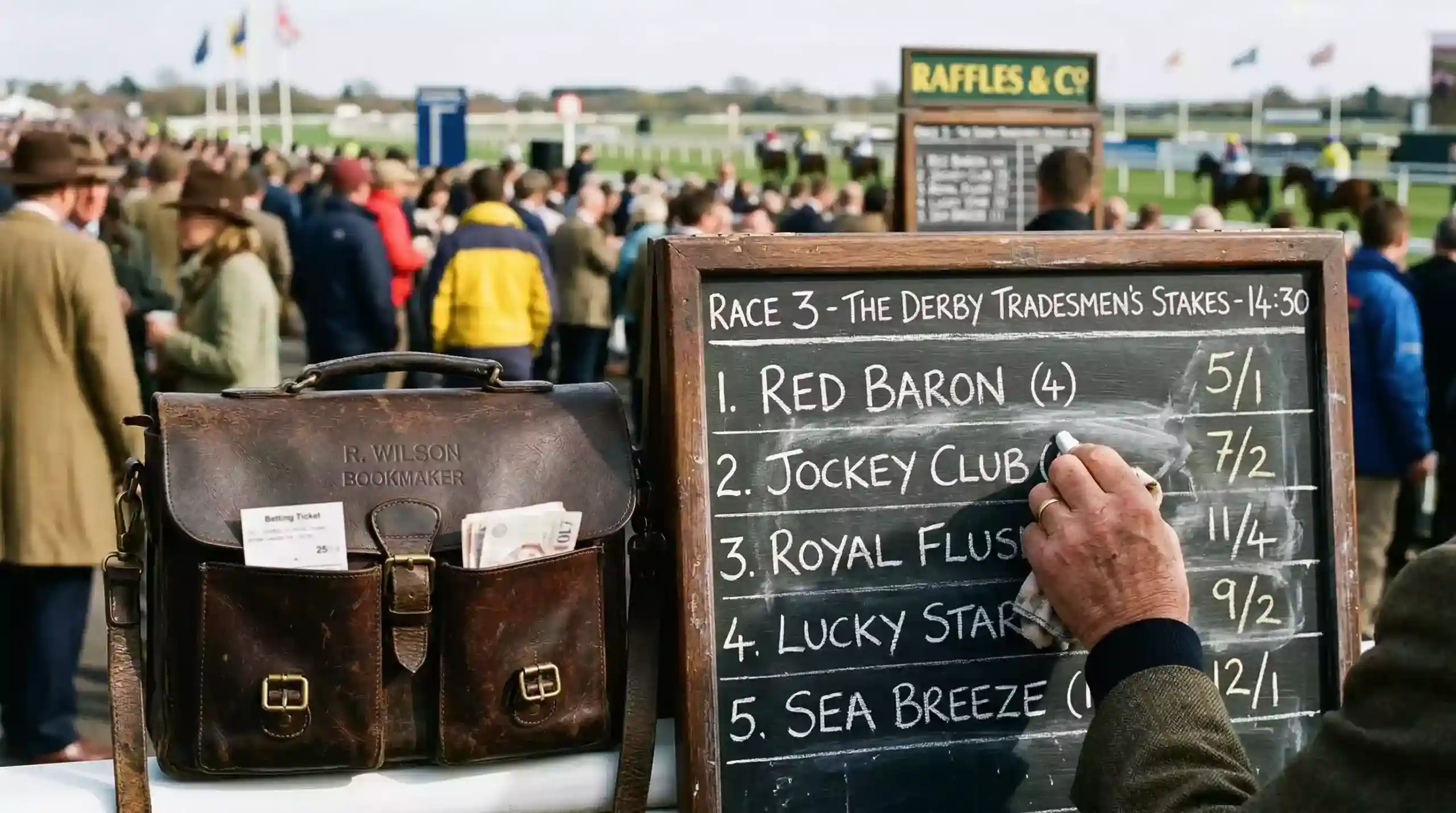
Know the numbers. Horse racing odds determine returns, reflect probability assessments, and signal market confidence—yet many punters never fully understand how they work. British punters wagered £3.08 billion on horse racing through off-course channels in the year to March 2024, much of it placed without complete understanding of pricing mechanics.
This guide covers the essential concepts: fractional versus decimal odds, Starting Price formation, early price advantages, and Best Odds Guaranteed protection. Understanding these mechanics transforms odds from confusing numbers into useful information that improves betting decisions and protects against leaving value on the table.
Fractional vs Decimal Odds
Traditional British odds appear as fractions—5/1, 7/2, 11/4. These express profit relative to stake. At 5/1, every pound staked returns five pounds profit if successful. At 7/2, every two pounds staked returns seven pounds profit. The total return includes your original stake, so a winning £10 bet at 5/1 returns £60: £50 profit plus £10 stake.
Decimal odds express total return per unit staked. Odds of 6.00 mean a £1 bet returns £6 total—equivalent to 5/1 fractional. The conversion formula: divide the first fractional number by the second, then add one. So 5/1 becomes (5÷1)+1=6.00; 7/2 becomes (7÷2)+1=4.50; 11/4 becomes (11÷4)+1=3.75.
Decimal odds simplify return calculations for complex bets. Accumulator returns multiply decimal odds across selections—2.00 × 3.00 × 4.00 = 24.00 total return per unit staked. Achieving the same calculation with fractional odds requires converting to decimals first or performing cumbersome fraction multiplication.
Implied probability converts odds to percentage chance. For decimal odds, divide 100 by the decimal: 6.00 implies 16.67% probability; 2.00 implies 50%; 1.50 implies 66.67%. This conversion reveals what bookmakers believe about each horse’s chances—and enables comparison with your own assessment to identify potential value.
Bookmaker platforms typically allow switching between formats. Choose whichever feels more natural. Many experienced bettors use fractional odds for singles and decimal for multiples, combining intuitive familiarity with computational convenience. Neither format is superior—they express identical information differently.
Odds-on prices deserve particular attention. At 1/2 fractional (1.50 decimal), you risk £2 to win £1 profit. At 1/4 fractional (1.25 decimal), you risk £4 to win £1. These cramped prices offer high probability but limited returns—and a single loss requires multiple wins to recover. Assess whether odds-on selections genuinely warrant such confidence.
Understanding Horse Racing Odds UK — More on this topic at horse racing betting tips.
Starting Price Explained
Starting Price (SP) represents the official odds at race start, calculated from on-course bookmaker prices. Independent assessors average prices displayed in the betting ring as the race begins, producing a single SP for each runner. This price determines returns for bets placed at SP rather than fixed early prices.
SP reflects late market information. Money arriving in the final minutes before a race—informed money, stable confidence, professional betting—influences SP formation. A horse attracting late support shortens from morning prices; one losing support drifts. SP captures this information flow, often differing significantly from early prices.
Betting at SP means accepting whatever price forms. You forfeit the opportunity to lock in early value but gain protection against backing horses whose prices shorten. If a horse opens 8/1 and starts 4/1, SP bettors receive only 4/1; early price takers secured 8/1. Conversely, if it opens 8/1 and starts 12/1, SP bettors benefit from the drift.
SP suits certain betting scenarios. When you lack time to monitor markets, SP removes the need for price management. For horses you expect to drift—perhaps those whose chances the market overestimates—SP might deliver better returns than early prices. For horses likely to shorten, taking early prices locks in value that SP would sacrifice.
Industry SP differs from exchange SP. Betfair calculates its own SP from exchange trading, which might vary from official on-course SP. When comparing prices or analysing results, verify which SP calculation applies. Understanding these distinctions prevents confusion when evaluating performance across different platforms.
See also Strike Rate vs ROI.
Early Prices and Market Movers
Early prices appear the evening before racing or morning of race day, reflecting bookmakers’ initial assessments. These prices contain wider margins than race-time markets—bookmakers build in extra protection when information remains incomplete. Yet within these margins, value opportunities exist for bettors whose analysis identifies mispriced selections.
Market movers are horses whose prices change significantly from opening to start. A horse shortening from 10/1 to 5/1 has attracted substantial support; confidence exists somewhere. A horse drifting from 5/1 to 10/1 has lost support; information suggests problems. Tracking these movements reveals where informed money is flowing.
Steamers—horses whose prices collapse—often win. Support doesn’t guarantee success, but consistent shortening suggests those with inside knowledge rate the horse’s chances highly. Following steamers blindly produces mixed results; understanding why support arrived enables better evaluation of whether to follow or oppose.
Drifters—horses whose prices lengthen—often disappoint. The market rarely drifts horses without reason. Yet sometimes drift reflects simple lack of interest rather than genuine negative information. Horses drifting because attention focused elsewhere might represent value overlooked by distracted markets.
Overall betting turnover declined 4.3% in 2025, reducing market liquidity and potentially increasing price volatility. Thinner markets might see larger moves on smaller volumes, making market-move analysis less reliable than in deeper liquidity environments.
Best Odds Guaranteed
Best Odds Guaranteed (BOG) policies pay whichever is higher—your fixed price or Starting Price. This protection eliminates downside from taking early prices that subsequently drift. If you back a horse at 5/1 and it starts 8/1, BOG pays 8/1. If it starts 4/1, you still receive your original 5/1.
BOG coverage varies between bookmakers. Most offer BOG on UK and Irish racing from morning prices onward, though some restrict coverage to specific meetings or exclude certain race types. Maximum enhanced payouts might be capped, limiting benefit on large stakes. Review each bookmaker’s specific terms rather than assuming uniform coverage.
The feature genuinely adds value. Taking early prices with BOG protection captures the best of both approaches—you lock in current value while maintaining upside if markets move in your favour. Without BOG, early betting requires sacrificing potential drift benefits for price certainty.
Some bookmakers have withdrawn or restricted BOG recently, citing commercial pressures. Regulatory changes around affordability checks have squeezed operator margins, with BOG identified as a cost to cut. Punters valuing BOG should verify coverage before placing bets—policies previously available might have changed.
BOG interacts strategically with early price-taking. When confident a horse will shorten, take early prices without BOG concern—you’re locking in value that will disappear. When uncertain about price direction, BOG provides insurance against adverse movement. When expecting drift, consider waiting for SP rather than relying on BOG to capture improvement you could access directly.
Know the Numbers
Understanding odds mechanics transforms betting from guesswork into informed decision-making. Fractional and decimal odds express identical information in different formats—choose whichever suits your calculations, recognising that decimal simplifies complex accumulator maths. Starting Price reflects late market information, capturing movements that early prices miss but forfeiting the chance to lock in value before markets sharpen. Early prices offer value-locking opportunities but commit you before full information arrives; market movers signal where informed money flows, though following blindly produces inconsistent results. Best Odds Guaranteed bridges early and late pricing, providing protection that makes early price-taking less risky when coverage applies. Mastering these concepts ensures you’re never confused by the numbers that determine your returns.
