
 Available in US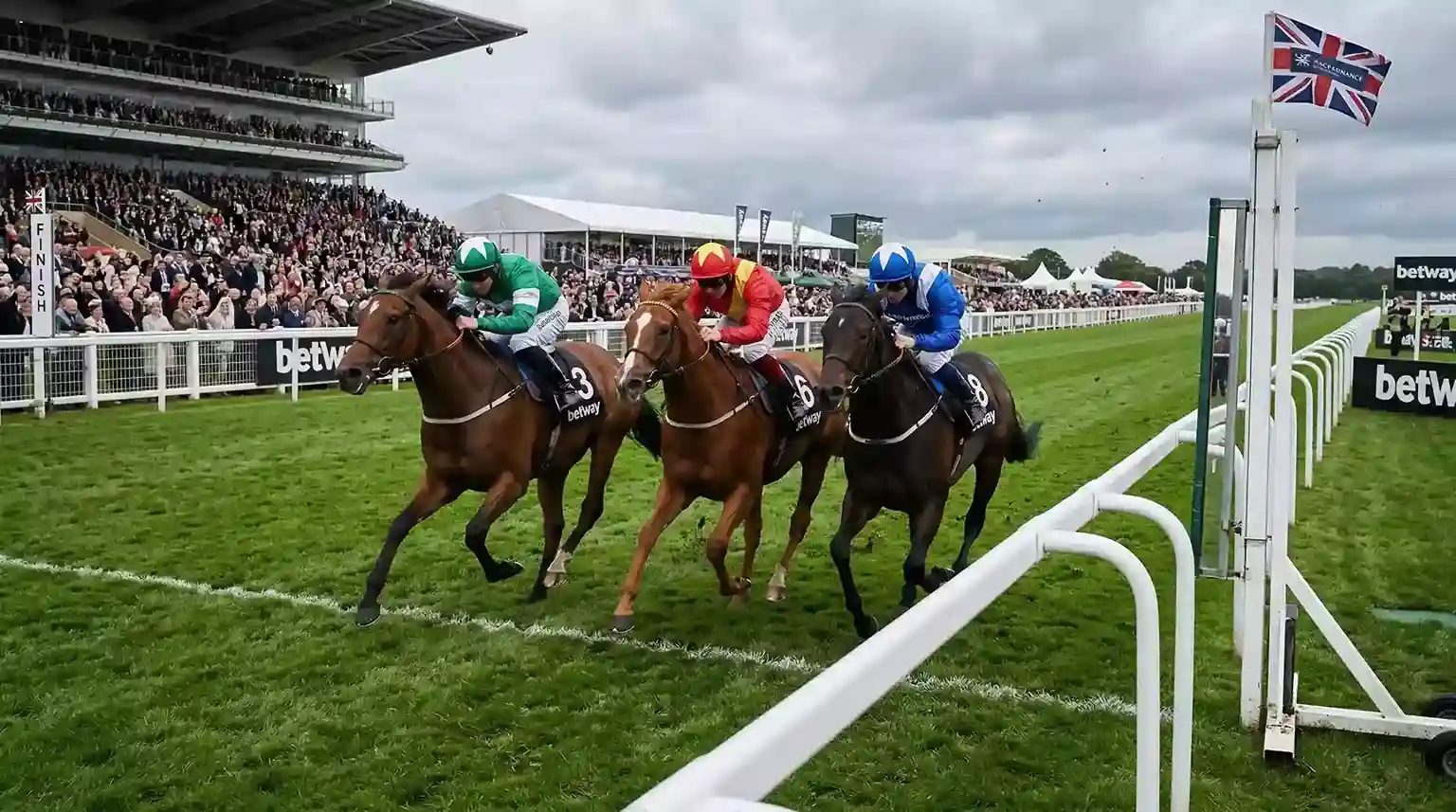
Two bets in one. That simple description captures why each-way betting remains the default choice for many British racing punters. When you back a horse each-way, you’re placing equal stakes on it to win and to place—typically finishing in the first three or four, depending on field size. If the horse wins, both bets pay out. If it finishes placed but doesn’t win, you recover something. Only complete failure costs the full stake.
The appeal is obvious: insurance against near misses. But each-way betting is not universally sensible. Understanding when the place portion offers genuine value—and when it merely dilutes returns—separates thoughtful punters from those who default to each-way regardless of circumstances. As Richard Wayman, BHA’s Director of Racing, noted when discussing the sport’s future direction: “We wanted to make our best racing better and use that as our tool to grow interest in the sport.” Better racing means more competitive fields, and more competitive fields create different each-way dynamics.
How Each-Way Bets Work
An each-way bet comprises two separate stakes: a win bet and a place bet. If you stake £10 each-way, you’re committing £20 total—£10 on the horse to win, £10 on it to place. The win portion pays at full odds if your selection finishes first. The place portion pays at a fraction of those odds—typically one quarter or one fifth—if the horse finishes in the places.
Suppose you back a horse at 10/1 each-way with £10 stakes. If it wins, the win portion returns £110 (£10 stake plus £100 profit) and the place portion pays at 10/1 divided by four, so 5/2, returning £35 (£10 stake plus £25 profit). Total return: £145 from a £20 outlay. If the horse finishes second or third, only the place portion pays: £35 returned from £20 staked, delivering a £15 profit overall. If it finishes fourth or worse, both bets lose.
The mathematics create asymmetric outcomes. A placed finish that isn’t a win produces modest returns. The genuine upside requires the horse to actually win—at which point the place portion adds a bonus but is not the primary source of profit. This dynamic means each-way betting rewards horses with strong win chances more than horses likely to place but unlikely to win.
Some punters mentally calculate each-way returns as a single combined bet, but treating the components separately clarifies decision-making. Ask: would I back this horse win-only at these odds? Would I separately back it for a place at these fractional odds? If either answer is no, the each-way combination may not represent value.
Each-Way Betting in Horse Racing — More on this topic at horse racing betting tips.
Place Terms: 1/4, 1/5 and Extra Places
Standard place terms vary by field size and race type. For non-handicap races with 5-7 runners, bookmakers typically pay first and second only at 1/4 odds. Races with 8+ runners pay first, second, and third at 1/4 odds. Handicaps with 12-15 runners pay four places at 1/4 odds, while 16+ runner handicaps pay four places at 1/5 odds. These industry standards apply unless bookmakers advertise enhanced terms.
Races with fewer than five runners are usually win-only. Your each-way stake becomes a single win bet at half the intended total, though some bookmakers void the place portion and return that stake. Always check before betting on small fields.
Extra places represent one of bookmakers’ most common promotions. During major festivals or on Saturdays, operators might pay five or six places on handicaps instead of the standard four. This sounds generous, but the value depends on how competitive the race is. In a 20-runner handicap where any of a dozen horses could place, extra places offer genuine insurance. In a race with three obvious contenders and a weak supporting cast, the extra places rarely help.
The fraction matters. Receiving 1/4 odds versus 1/5 odds on the place portion significantly affects returns. On a 10/1 selection, the place portion pays 5/2 at 1/4 terms but only 2/1 at 1/5 terms. Over time, consistently securing better place terms compounds into meaningful profit differences. This is why some punters shop between bookmakers for optimal each-way terms rather than accepting the first price available.
Field Size and Each-Way Value
Field size fundamentally shapes each-way value. In a five-runner race paying two places, backing a 5/1 chance each-way gives you roughly a 40% chance of placing (assuming equal ability) for returns of 5/4 on that portion—thin margins even before the bookmaker’s overround. In a 20-runner handicap paying four places, the same nominal 5/1 shot offers better proportional coverage.
The 2025 Flat season averaged 8.9 runners per race, while Jump racing averaged 7.84. These figures matter for systematic each-way bettors. Smaller Jump fields mean fewer place spots relative to runners, reducing the mathematical attraction of the place portion. Larger Flat fields, particularly in handicaps, create situations where each-way value becomes more appealing.
Quality of opposition interacts with field size. A 10-runner race with two standout horses and eight no-hopers effectively behaves like a three-runner race for place purposes—those two plus one other will likely fill the frame. A 10-runner race where eight horses have legitimate place chances creates genuine uncertainty that each-way betting can exploit.
Big-field handicaps at festivals represent the traditional each-way hunting ground. Races like the Grand National, Royal Hunt Cup, or any Heritage Handicap attract 20+ runners with minimal separation in the betting market. Here, each-way coverage on outsiders at 20/1 or larger can produce meaningful place returns while preserving exposure to win at big prices. The place portion might pay 5/1 for a fourth-place finish—a standalone profit on that portion even without winning.
See also Lucky 15 Bets Explained.
When Each-Way Beats Win-Only
Each-way betting outperforms win-only in specific circumstances. Recognising these situations prevents defaulting to each-way when win-only would be more profitable.
The clearest case involves horses whose chance of placing substantially exceeds their chance of winning. A front-runner with proven stamina limitations might lead into the final furlong but regularly get caught—placing more often than winning. If odds sufficiently compensate for the reduced win probability, the place portion captures that consistent frame finish. The key is identifying horses with asymmetric place-versus-win profiles.
Competitive handicaps favour each-way approaches. When the market struggles to separate contenders—prices bunched between 6/1 and 14/1 across a dozen runners—any selection carries significant place probability. Here, each-way coverage acknowledges genuine uncertainty. Win-only betting in such races requires stronger conviction than the market allows.
Conversely, short-priced selections rarely justify each-way backing. A 2/1 chance paying 1/2 on the place portion offers no mathematical edge on the place component. If you believe the horse wins, back it win-only and accept full exposure. Each-way on favourites dilutes returns without proportionally reducing risk.
Market outliers deserve scrutiny. A horse at 25/1 when everything else is 10/1 or shorter might represent a value each-way proposition: the place portion at 6/1 could offer better terms than you’d get backing another runner win-only. Alternatively, the 25/1 might be friendless for good reason. Discriminating between genuine each-way value and dead money requires form analysis, not just price gaps.
Key Takeaways
Each-way betting combines win and place bets at fixed odds fractions—two bets in one, requiring double the stated stake. Place terms vary by field size and race type, with handicaps offering more places at tighter fractions. Value emerges in big-field competitive races where genuine place uncertainty exists, not in small fields or when backing short-priced horses. The best each-way propositions involve horses with strong place probability relative to their win chances, at odds where both components offer mathematical appeal. Treat the win and place portions as separate decisions: if either lacks value alone, the combination probably doesn’t either.
