
 Available in US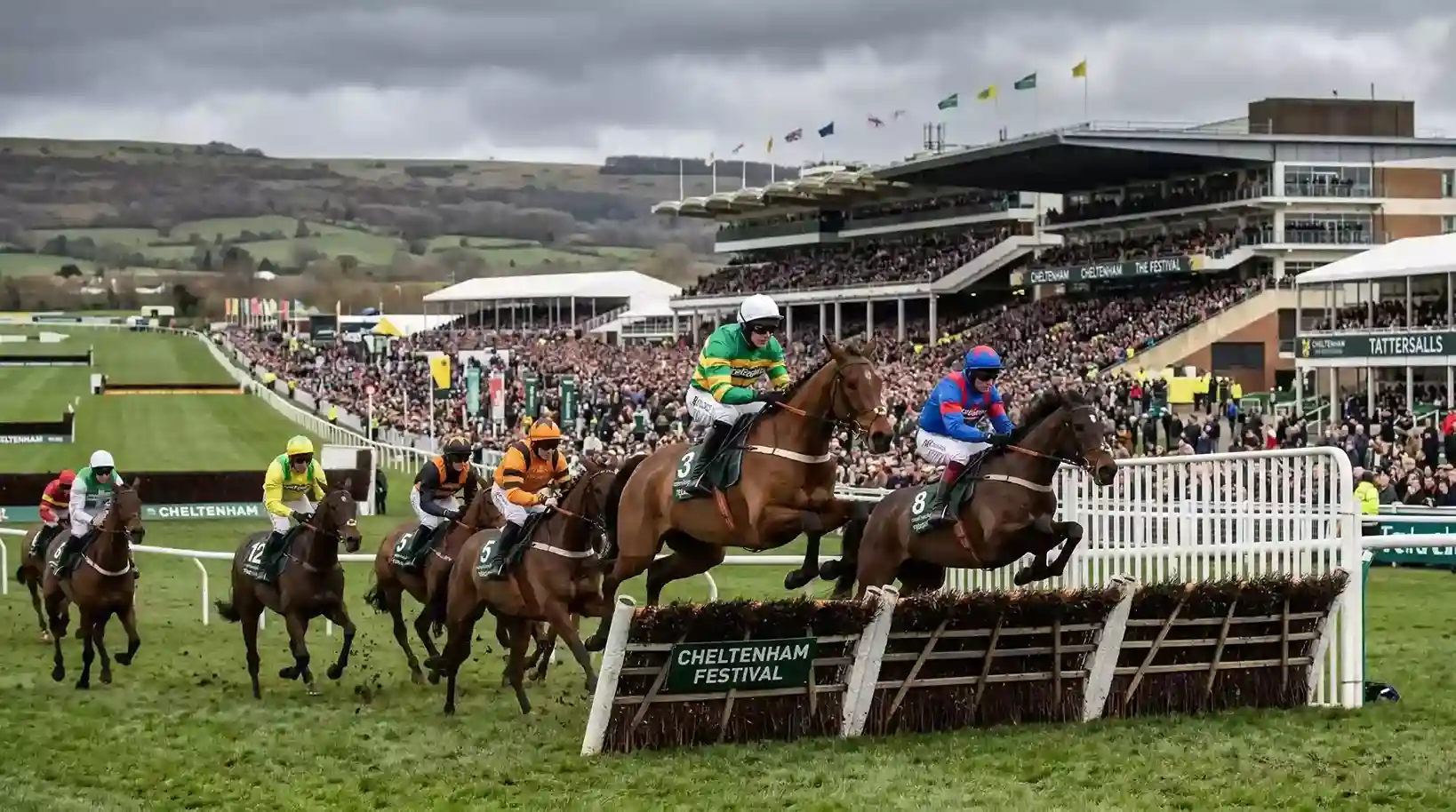
Four days of drama. The Cheltenham Festival represents National Hunt racing’s championship meeting—28 races across four days in March, featuring the best horses from Britain and Ireland competing for racing’s most coveted prizes. For punters, the Festival offers unmatched opportunity: deep liquidity, intense form scrutiny, and races where preparation and analysis genuinely create edge.
The Festival’s significance reflects in the numbers. British Jump racing operates with just 3,001 horses in training, a 16% year-on-year decline, yet the cream of this diminishing pool converges on Prestbury Park each March. Understanding the form lines that predict Festival success, recognising which Irish raiders pose genuine threats, and adjusting strategies across the meeting’s distinct days separates profitable Festival punters from those overwhelmed by the occasion.
Why Cheltenham Is Different
Cheltenham’s course configuration creates unique demands. The undulating track features a stiff uphill finish that exposes horses lacking true stamina. The New Course and Old Course layouts offer subtly different challenges. Fences are stiffer than many tracks; hurdles demand precise jumping. Horses who glide around flat, galloping tracks sometimes struggle with Cheltenham’s relentless demands.
The crowds intensify the challenge. Festival attendance exceeds 60,000 daily, generating an atmosphere unlike any other racing occasion. Inexperienced horses—particularly novices making their Festival debuts—can become unsettled by the noise, the crowds, and the sheer sensory overload. Experienced Festival performers who handle the occasion gain genuine advantage over debutants.
Competition quality exceeds ordinary racing by margins that distort normal form comparisons. A horse who dominates British handicaps might finish mid-division against Festival specialists. A comfortable Grade 2 winner might be outclassed in a Festival Grade 1. Adjusting for the quality leap requires acknowledging that form earned elsewhere might not translate to Cheltenham’s unique context.
Ground conditions add variables. March weather produces anything from good ground through to heavy, sometimes varying across the four days. Horses with specific ground requirements face uncertainty until race week, complicating ante-post planning. The going description at declaration stage might differ from conditions at race time if weather intervenes.
Tactical pace scenarios vary by race. The Supreme Novices’ Hurdle typically unfolds at a genuine gallop; the Champion Hurdle’s smaller field allows tactical positioning. Understanding likely pace setups for each race type helps identify which horses benefit and which face unfavourable scenarios.
Cheltenham Festival Betting — More on this topic at horse racing betting tips.
Key Form Lines: Leopardstown, Dublin and UK Trials
Irish Christmas meetings establish form lines that translate directly to Cheltenham. The Leopardstown Festival over Christmas and the Dublin Racing Festival in February feature Ireland’s best horses in championship conditions. Winners and placed horses from these meetings regularly confirm the form at Cheltenham—or expose gaps between Irish domestic form and true Grade 1 level.
The Dublin Racing Festival serves as Cheltenham’s most direct trial. Run just four weeks before the Festival, Dublin features races that map directly to Cheltenham targets—Irish Gold Cup to Gold Cup, Chanelle Pharma Novice Hurdle to Supreme or Ballymore. Strong Dublin performances typically produce strong Cheltenham performances; disappointing Dublin runs raise questions about Festival prospects.
UK trials carry different weight. Newbury’s Betfair Hurdle and Denman Chase provide form indicators, though the track configuration differs from Cheltenham. Kempton’s trials suit horses with different profiles. Ascot’s Clarence House Chase identifies Champion Chase contenders. Weight each trial according to how closely track demands and race conditions mirror Cheltenham equivalents.
Watch for horses whose trial form suggests Cheltenham readiness without full exposure. Trainers targeting the Festival sometimes deliberately avoid hard races in trials, producing quiet prep runs that mislead casual observers. Workout reports, stable confidence indicators, and trainer interview tone might signal more than recent results suggest.
Cross-reference form lines through collateral. If Horse A beats Horse B in December, and Horse B beats Horse C in February, the relative form of A and C becomes estimable despite never meeting. Building these chains through the season’s trials produces form pictures richer than individual race analysis provides.
See also Grand National Betting Guide.
Irish Raiders: The Mullins and Elliott Factor
Irish-trained horses dominate the modern Cheltenham Festival. Willie Mullins and Gordon Elliott between them typically account for half or more of Festival winners, with supporting raids from Henry de Bromhead, Gavin Cromwell, and other Irish yards. Understanding Irish dominance—and its limits—proves essential for Festival betting.
Irish trainers benefit from deeper horse populations, more competitive domestic racing, and training methods developed over generations. The Dublin Racing Festival alone attracts stronger fields than many British meetings manage all season. Horses battle-hardened through Irish campaigns arrive at Cheltenham prepared for the intensity British counterparts sometimes lack.
The crisis in British novice chasing illustrates the gap. Only two British-trained horses contested Grade 1 novice chases at the 2025 Festival—a stark indicator of Irish dominance in developing young chasers. When British representation drops this low, blanket opposition to Irish raiders becomes self-defeating. Accepting Irish superiority in specific categories while identifying races where British horses retain competitive chances produces more profitable approaches.
Mullins in particular targets specific races with precision. His Closutton operation identifies Festival targets months in advance, prepares horses specifically for those races, and executes campaigns with ruthless efficiency. Opposing Mullins runners without strong reasoning rarely pays; identifying when his horses are vulnerable—wrong ground, suboptimal trip, returning from setbacks—creates selective opportunity.
Not all Irish raiders travel equally well. Some horses dislike the journey, the different environment, or Cheltenham’s specific demands. Previous Festival form reveals which horses handle the occasion and which struggle despite strong Irish records. A horse with a Festival placing carries proven course credentials that no amount of Irish form can replicate.
Betting Strategies by Day
Champion Day opens the Festival with flagship races: the Supreme Novices’ Hurdle, Champion Hurdle, and Champion Chase. These Grade 1 events attract the best horses and the sharpest markets. Finding value on Day One requires either strong conviction or contrarian angles, as casual money floods toward obvious contenders.
Ladies Day features the Queen Mother Champion Chase and typically offers competitive handicaps alongside the featured events. Handicap fields are often larger and more open than Day One’s Grade 1 events, creating each-way opportunities in races where any of a dozen horses might place.
St Patrick’s Thursday brings the Stayers’ Hurdle and Ryanair Chase—races where stamina and course form prove particularly relevant. The Thursday card often features strong Irish representation celebrating their national day abroad. Market confidence in Irish runners might create value on British alternatives in supporting races.
Gold Cup Day concludes the Festival with its defining race. By Friday, punters have observed three days of going conditions, identified which horses handle the track, and adjusted views based on earlier results. Information accumulated across the meeting informs Friday betting more reliably than pre-Festival analysis. Late money on Gold Cup Day often reflects genuine insight rather than speculation.
Across all four days, bankroll discipline matters more than individual selections. The Festival’s intensity tempts overexposure; excitement overrides judgement. Set daily limits before the meeting starts and respect them regardless of early results. A profitable Tuesday shouldn’t fund reckless Friday betting; an unprofitable Wednesday shouldn’t trigger desperate chasing.
Four Days of Drama
The Cheltenham Festival demands specific preparation that ordinary racing doesn’t require. The unique course configuration, intense atmosphere, and elevated competition quality distort normal form comparisons. Irish trials—particularly the Dublin Racing Festival—provide the most reliable form lines, though UK trials offer supplementary indicators. Irish dominance, led by Willie Mullins and Gordon Elliott, reflects genuine superiority in horse population and development that British racing currently cannot match. Betting strategies should adapt across the four days, respecting the information flow that each day provides while maintaining bankroll discipline against Festival excitement.
