
 Available in US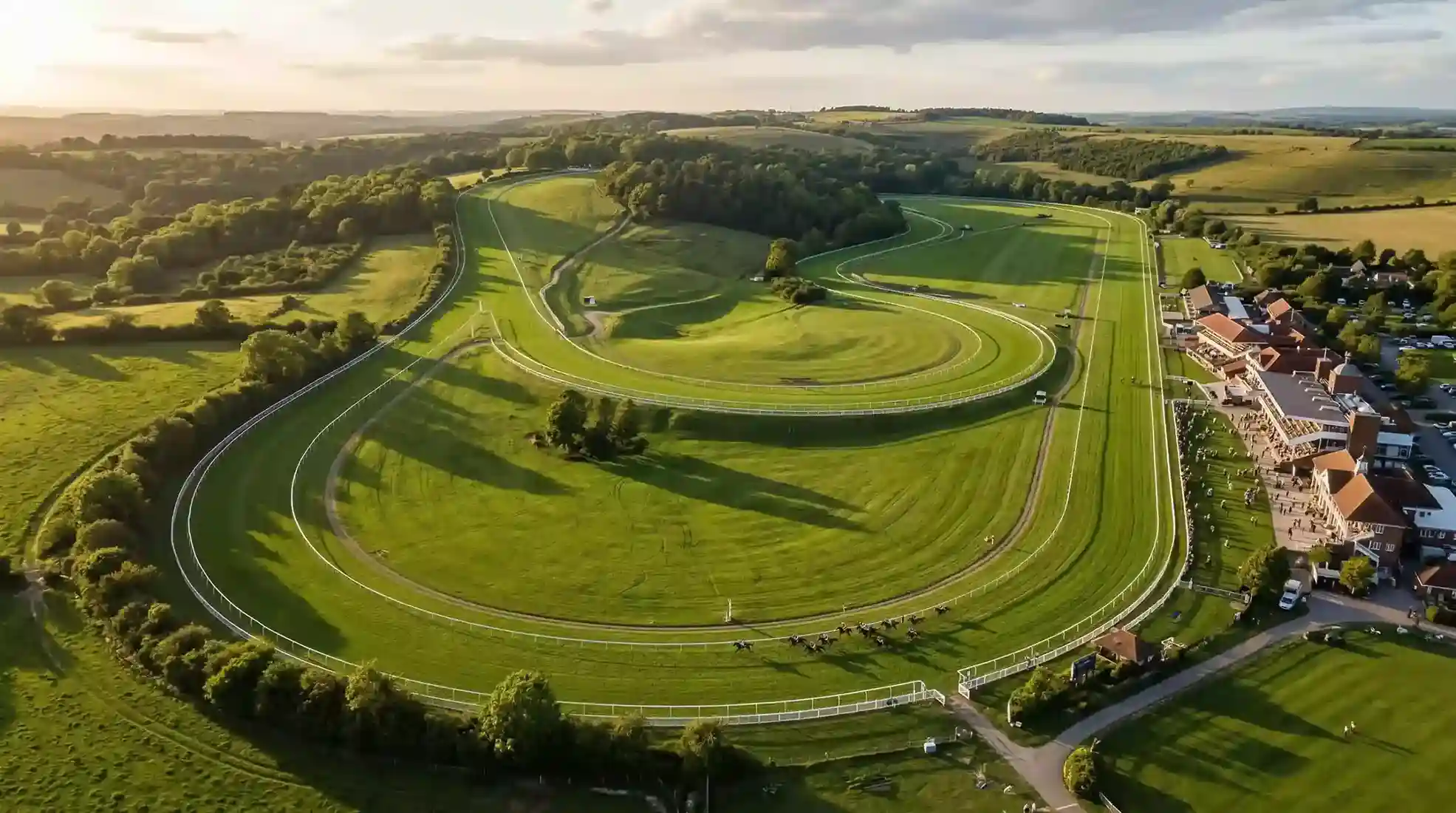
Horses remember tracks. A runner who struggled around Chester’s tight turns might thrive at Newmarket’s expansive galloping layout. Another who failed over a mile at Sandown might excel over the same trip at Goodwood, where the undulating configuration suits its running style. Course and distance form—abbreviated as C&D on racecards—captures this proven compatibility between horse and venue.
British racing encompasses remarkable track diversity. From sharp, flat circuits like Catterick to undulating, stamina-testing layouts like Cheltenham, each course presents distinct challenges. Richard Wayman, the BHA’s Director of Racing, acknowledged this complexity when discussing industry changes: “We will learn as we go. Not all of the changes we have introduced will be immediately successful.” The same principle applies to horses learning which tracks suit them—and punters learning to recognise these patterns.
What C&D Means on a Racecard
The C&D notation on a racecard indicates a horse has previously won at this course over this distance. A “C” alone means a previous course win at any distance; “D” alone means a win at this distance but at another course; “CD” confirms a win at this exact venue and trip combination. These letters provide instant identification of proven performers.
Beyond the simple notation, form figures carry course identifiers. When examining a horse’s past performances, track abbreviations identify where each run occurred. A horse showing multiple runs at today’s course builds a venue-specific profile—did it perform consistently here, or did results vary? Patterns emerge that headline form figures alone miss.
Place form matters alongside wins. A horse without a course win but showing 2-3-2 in three visits clearly handles the track despite lacking a victory. Another with one course win surrounded by poor efforts might have benefited from specific circumstances unlikely to recur. Look beyond the C&D letter to examine performance patterns.
The average Flat field contains 8.9 runners, while Jump fields average 7.84. In fields this size, even modest C&D advantages matter—eliminating two or three runners who have struggled at the venue narrows analysis to genuine contenders. Course form provides an efficient first filter before deeper form study begins.
When Course Form Trumps Class
Some courses produce such idiosyncratic demands that track specialists consistently outperform classier rivals encountering the layout for the first time. Chester’s tight turns catch out horses with long, sweeping actions. Epsom’s camber and gradients trouble those who can’t handle the unique configuration. Brighton’s undulations suit horses who handle up-and-down terrain. At these venues, course form often predicts better than pure ability.
Identify tracks where course form proves particularly predictive. Look for venues where previous winners show elevated repeat-win rates, or where first-time visitors consistently underperform market expectations. Statistical analysis of historical results reveals which courses favour experience and which run more straightforwardly.
Draw interacts with course form at certain tracks. Knowing that a horse previously won at this course matters more when combined with knowledge of how today’s draw affects chances. A course winner drawn badly might struggle despite proven venue form; a course newcomer drawn perfectly might overcome unfamiliarity. Consider draw alongside C&D rather than viewing either factor in isolation.
Class drops magnify course form importance. A horse returning to a track where it won previously, now racing from a lower rating after disappointing elsewhere, combines two positive factors—proven course ability and reduced competition level. These scenarios represent some of the strongest course form situations.
Trainer patterns interact with course form. Certain trainers send runners to specific courses repeatedly, building stable-wide expertise at those venues. A trainer who regularly raids a particular course might succeed with horses lacking individual venue experience because the yard understands how to prepare for that track’s demands.
Jump racing amplifies course effects. Fence positions, hurdle placements, and run-in lengths vary significantly between venues. A horse that jumps fluently at Cheltenham’s stiff fences might struggle at Sandown’s more forgiving obstacles, or vice versa. Course form over jumps carries additional weight because the obstacles themselves differ.
Course and Distance Form — More on this topic at horse racing betting tips.
Distance Specialists and Trip Preferences
Distance form identifies horses competing at their optimal trip. A horse whose best performances cluster around a mile but who has struggled over ten furlongs clearly has trip limitations. When returned to the shorter distance, improvement follows predictably—the form pattern indicates where the horse belongs.
Breeding suggests distance aptitude before racecourse evidence accumulates. Progeny of sprint sires typically prefer shorter trips; those by stamina-oriented stallions often need further. First-time distance attempts become more predictable when breeding aligns with the new trip. A horse by a twelve-furlong sire stretching to a mile and a half attempts something its pedigree supports.
Pace scenarios interact with distance preferences. A horse that barely stays a mile on good ground might fail to get the trip on softer going, where increased effort drains stamina earlier. Conversely, a strong stayer might see its advantage magnified when testing conditions turn modest trips into genuine tests of stamina. Consider going alongside distance when assessing trip suitability.
Age affects distance preferences. Two-year-olds often lack the maturity to see out longer trips, improving over further as they strengthen. Older horses might lose the speed to compete at shorter distances, finding their level over middle trips. Career distance progression provides context for today’s trip selection.
Watch for horses with distance form at today’s trip but earned at different track configurations. Staying a mile and a half around Chester’s flat, tight circuit differs from staying it at Ascot’s stiff, galloping layout. The D on the racecard confirms distance proved but not whether the course configuration suits similarly.
Limits of C&D: When to Ignore It
Course and distance form loses relevance when too much time has passed. A course win achieved three seasons ago under different conditions, at a different stage of the horse’s career, against different opposition, provides limited guidance for today’s race. Treat aged C&D form as background context rather than predictive evidence.
Improving horses outgrow previous course performances. A horse that won at this course from a rating of 75 but now competes from 95 after progression faces entirely different competition. The C&D win confirms venue suitability but says nothing about ability to compete at the current level. Class progression nullifies historical venue success.
Going variation undermines distance form particularly. A horse that comfortably stayed ten furlongs on good ground might struggle over the same trip on heavy going, where increased effort depletes stamina reserves earlier. The “D” on the racecard confirms historical distance capability but not under today’s specific conditions.
Straightforward galloping tracks minimise course form importance. At venues where horses can race naturally without negotiating unusual features, first-time visitors suffer less disadvantage. Save course form analysis for venues where track-specific factors genuinely influence outcomes.
See also Free vs Paid Tipsters UK.
Horses Remember Tracks
Course and distance form captures proven compatibility between horse and venue. The C&D notation identifies winners at today’s track and trip; examining place form and performance patterns adds depth beyond the headline letters. Certain tracks amplify course form importance, particularly those with unusual configurations that catch out first-time visitors. Distance preferences emerge from career patterns and breeding indicators. But C&D form loses predictive value when time, class progression, or going changes intervene. Used thoughtfully, track history narrows fields and identifies genuine contenders; applied blindly, it creates false confidence in outdated evidence.
