
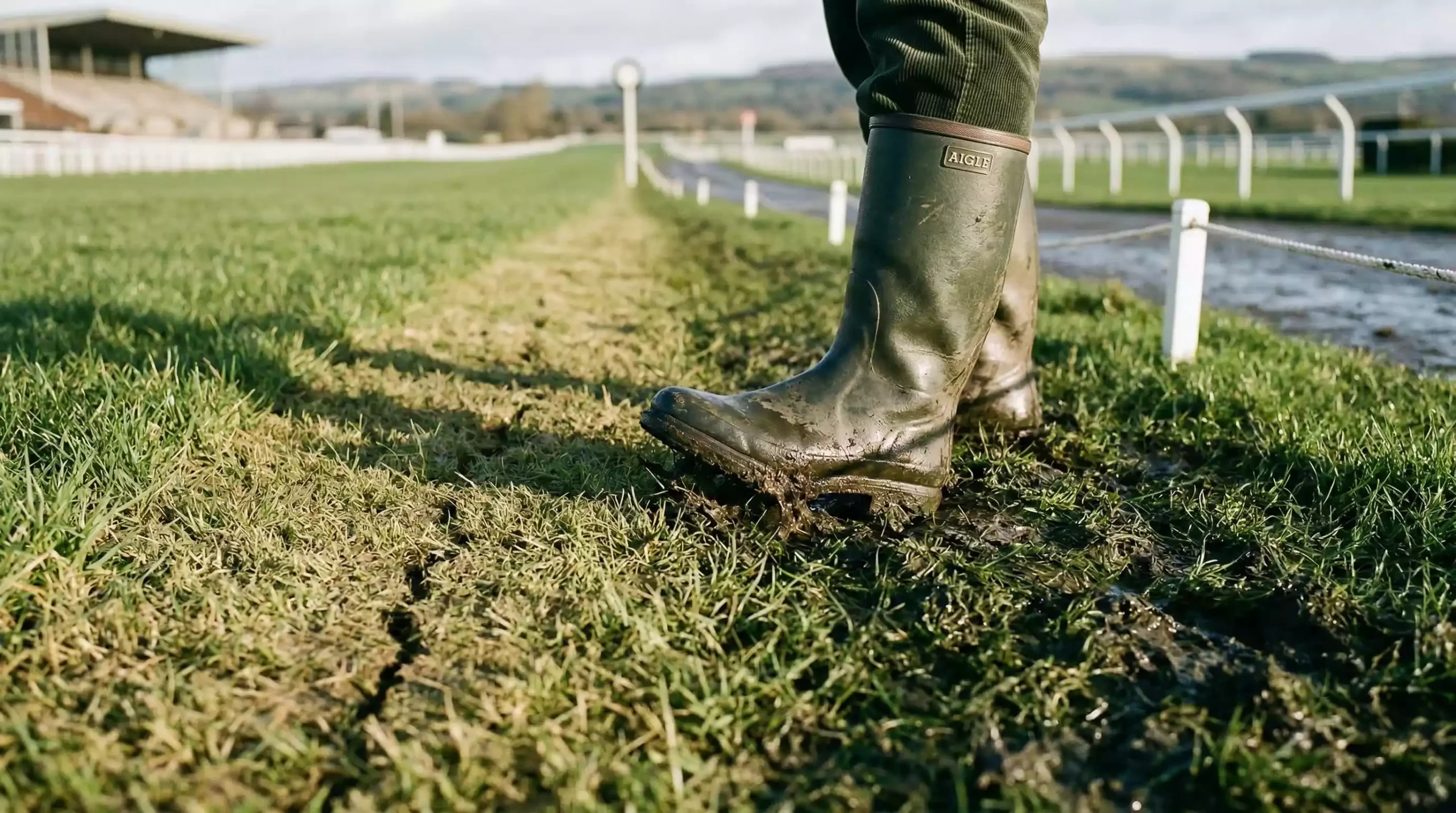
Ground changes everything. The same horse that cruises through a field on good ground might labour through soft going like a car stuck in mud, while a rival who appeared outclassed suddenly finds conditions that unlock hidden ability. British racing’s obsession with going conditions is not mere tradition—it reflects a genuine performance variable that can override class, form, and market expectation.
Weather disruption makes this factor particularly relevant for UK punters. In 2024, 78 full or partial fixture abandonments occurred due to unsuitable ground conditions—a reminder that British weather refuses to cooperate with racing schedules. Those meetings that do survive often run on dramatically different ground than forecast, transforming race dynamics. Understanding what each going description means, and which horses handle which conditions, separates bettors who account for variables from those who treat every race identically.
The Going Scale: From Firm to Heavy
British racing uses a standardised going scale that runs from the fastest surface to the slowest. Each step represents meaningful differences in how horses travel and how races unfold.
Hard ground sits at the extreme fast end, rare on British turf courses and generally avoided because it increases injury risk. Firm follows—quick ground that favours speed horses with lower, economical actions. Trainers with delicate-limbed horses often wait for rain rather than risk jarring impacts. Good to firm represents the most common summer surface, fast enough to reward speed while offering some cushion. Good ground is the default benchmark, neither particularly quick nor testing—the condition most trainers target and most form comparisons assume.
Moving to the slower side, good to soft introduces enough moisture to demand extra effort. Horses with high knee actions begin to gain advantage. Soft ground becomes genuinely testing, favouring stamina over pure speed and transforming trip requirements—a horse that stays a mile on good ground might struggle over the same distance when soft. Heavy represents the ultimate test, where races become attritional slogs and only genuine mudlarks thrive. Times slow dramatically, and many trainers simply refuse to run on it.
Intermediate descriptions like yielding (commonly used in Ireland) fall between good and soft. Course clerks sometimes add qualifiers—”good, good to soft in places”—indicating variation across the track. The home straight might ride faster than the back stretch, or particular areas that drain poorly might be softer. These nuances matter, especially for races where specific portions of the track influence results disproportionately.
How Going Is Measured and Reported
Course clerks use the GoingStick—a penetrometer that measures resistance as it enters the ground—to provide objective readings. The device produces a numerical value that correlates with traditional descriptions. Readings above 10 typically indicate good to firm or firmer; readings between 6 and 10 suggest good; below 6 points to soft; under 4 means heavy. These numbers appear on racecards and betting sites, offering punters precise information beyond verbal descriptions.
The official going gets updated throughout a meeting. What begins as good to soft in the morning might deteriorate to soft after rain or improve as sun dries the surface. Crucially, the going description at declaration time—when trainers commit their horses—often differs from conditions at race time. A trainer might declare for good to soft, hoping conditions hold, only to find soft ground by the afternoon. Some non-runners result from going changes, as connections withdraw horses unsuited to the new conditions.
Weather forecasts become essential reading. If rain is predicted between declaration and race time, the going will likely worsen. If sunshine follows recent rain, ground could dry. Experienced punters check forecasts for the racecourse location, not just national weather summaries, since microclimates produce significant local variation. A meeting in Lancashire might run on soft ground while a course 50 miles south enjoys good to firm.
Track staff also manage ground through watering. During dry spells, courses water to prevent ground becoming uncomfortably firm. This intervention explains why summer ground often stays good rather than baking hard—but watering can create patches of inconsistent going, particularly if distribution is uneven.
Horse Preferences: Specialists vs Versatile Types
Some horses demonstrate clear going preferences. A form line reading “Acts on any ground” sounds versatile but often masks mediocrity—a horse that handles everything may excel at nothing. Genuine specialists transform on their preferred surface, finding lengths of improvement when conditions align.
Physical characteristics offer clues. Horses with round, daisy-cutting actions tend to prefer faster ground where their efficient movement maximises speed. Those with high knee actions—picking their feet up noticeably—often handle soft ground better, their movement preventing them from getting bogged down. Heavier-bodied horses sometimes prefer some cut in the ground to cushion their frame, while lighter types float over faster surfaces.
Breeding provides additional guidance. Certain sires consistently produce offspring with surface preferences. Sons and daughters of sprint stallions often need faster ground, while stamina-oriented bloodlines frequently handle testing conditions. Databases tracking progeny performance by going offer statistical evidence beyond individual form. A first-time runner from a sire whose progeny record a significantly higher strike rate on soft ground arrives with inherited tendencies.
Form notation helps identify specialists. Look for horses whose best performances cluster around specific conditions. A horse with a form line of 1-3-2 on soft but 7-9-8 on good is not inconsistent—it requires particular conditions to produce its best. When those conditions appear, the market sometimes undervalues the improvement, especially if recent form on unsuitable ground looks poor. The specialist returning to favoured conditions represents a systematic value angle.
The average Flat field in 2025 contains 8.9 runners, meaning each race includes horses with varying going preferences. Sorting genuine contenders from those disadvantaged by conditions often eliminates half the field before analysing form itself.
Going and Bet Type Selection
Ground conditions should influence not just which horses you back but how you structure bets. Different going creates different race dynamics, affecting whether favourites justify short prices or whether upsets become more likely.
Heavy ground produces more surprise results. Stamina becomes paramount, form on better ground proves unreliable, and genuine mudlarks—horses with proven soft ground ability—can overcome class deficits. This argues for wider each-way coverage on testing ground, accepting that favourites face greater upset potential. Backing longshots with soft ground form against shorter-priced rivals who have never encountered such conditions offers a systematic edge.
Fast ground tends to favour speed horses and reduce stamina advantages. Races often develop predictably, with prominent racers harder to catch from behind. Favourites on firm ground typically deliver higher strike rates because fast conditions minimise variables. This suggests tighter each-way strategies or win-only bets on well-suited candidates.
Changing ground during a meeting creates specific opportunities. Horses drawn to run later in the day when ground has deteriorated face different conditions than their morning counterparts. A horse that drifts in betting because morning rain softened the ground might represent value if it actually prefers cut in the surface. Conversely, horses shortening because they “like soft” become overbet when everyone spots the obvious angle.
For accumulator bets, mixing selections from different meetings requires accounting for ground variation. A four-fold combining firm ground sprinters from one course with soft ground stayers from another creates exposure to weather intervening at any venue. Single-course accumulators at least ensure consistent conditions across selections.
Key Takeaways
Ground changes everything in British racing. The going scale from firm through heavy represents genuine performance variables that can override class and recent form. Understanding how going is measured, when it changes, and which horses handle which conditions provides systematic advantages. Specialists returning to favoured ground often represent overlooked value, while horses with unproven surface records carry hidden risk. Conditions also influence bet type selection—wider each-way coverage on testing ground, tighter strategies on faster surfaces. Check the going before the form, and check it again before the off.