
 Available in US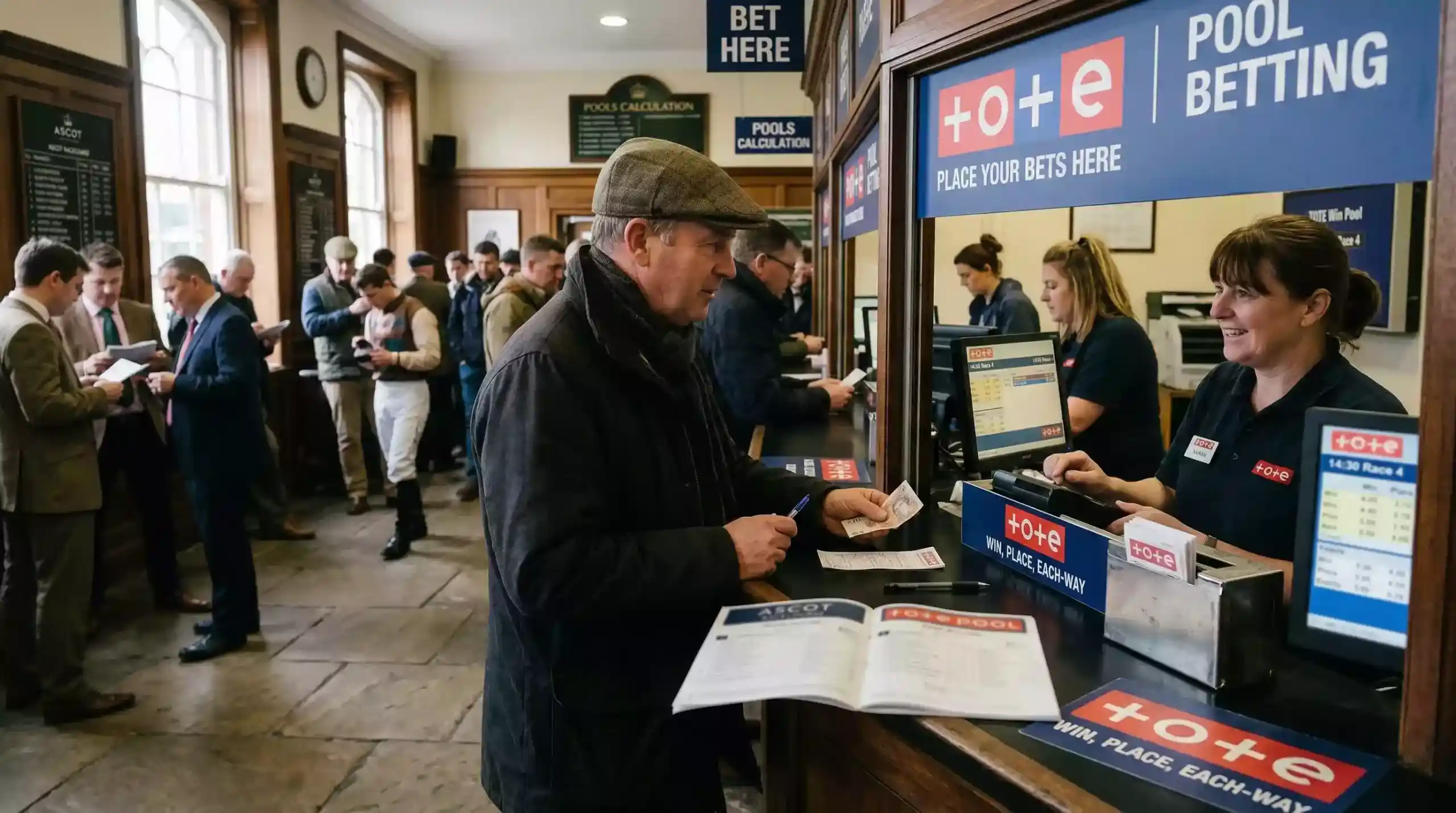
Six races, one shot. The Placepot challenges punters to find placed horses in the first six races at a meeting—not winners, just horses finishing in the places. This apparently modest demand disguises real difficulty: even selecting horses with high place probability, the mathematics of combining six consecutive legs produces low overall success rates.
Yet the Placepot offers something different from standard betting. As a pool bet, returns depend on how many winning tickets share the dividend rather than fixed odds. On days when results conspire against popular selections, Placepot dividends spike dramatically. Patient punters who understand how to structure tickets—using bankers, perms, and strategic coverage—can capture these outsized returns while managing stake costs.
How the Placepot Works
The Placepot requires selecting at least one horse in each of the first six races at a meeting. Each selection must place—finish in the designated place positions—for your ticket to survive into the next leg. If all six selections place, you hold a winning ticket and share the pool dividend.
Place terms follow standard rules based on field size. Races with five to seven runners pay two places; eight or more runners pay three places; handicaps with sixteen or more runners pay four places. Smaller fields make placing easier but offer less coverage protection—with only two places available, strong favourites become near-essential.
The pool accumulates money from all tickets sold. The Tote operator deducts commission—typically around 28%—and distributes the remainder among winning tickets. If many tickets win, each share is small; if few tickets win, dividends can reach hundreds or thousands of pounds per unit stake.
Returns are calculated per line. A £1 Placepot stake covers one line—one combination of selections across six races. Selecting multiple horses in any leg multiplies your lines and cost. Two selections in each of six races produces 64 lines costing £64 at £1 per line. Managing this multiplication while maintaining adequate coverage demands strategic planning.
Average Flat field sizes of 8.9 runners mean three places typically apply—reasonable coverage but still requiring genuine place probability for each selection. Jump racing’s average 7.84 runners occasionally produces smaller fields with only two places, tightening margins significantly.
Placepot Betting Explained — More on this topic at horse racing betting tips.
Bankers and Perms: Building Your Ticket
Bankers are single selections in legs where you have high confidence. Using one horse instead of multiple reduces line count dramatically—that leg multiplies by one rather than two or three. Strategic use of bankers controls costs while concentrating risk on your strongest opinions.
The mathematics illustrate banker impact. Selecting three horses in each of six legs produces 729 lines (3×3×3×3×3×3). Using bankers in three legs while selecting three horses in the others produces 27 lines (1×3×1×3×1×3). Same coverage intensity in half the legs at less than 4% of the cost.
Banker selection criteria should be strict. Odds-on favourites with strong recent form, proven track specialists returning to favoured courses, or horses with overwhelming class advantages justify banker status. A horse you merely “quite like” shouldn’t be a banker—reserve that designation for near-certainties in the place positions.
Perms—permutations—structure how selections combine. Full perms include every combination; partial perms include only selected combinations. A perm selecting “any two from three” in a leg would include that leg in your ticket only when two of your three selections place. Perms add complexity but enable coverage strategies impossible with full combination tickets.
Balance coverage against cost. Heavy coverage in every leg produces expensive tickets with modest returns even when successful—too many other punters hold winning tickets. Lighter coverage with well-chosen bankers risks early elimination but captures larger dividend shares when successful. Your risk tolerance and bankroll determine appropriate balance.
Consider each leg’s difficulty independently. Competitive handicaps with large fields warrant broader coverage; small-field conditions races with obvious favourites suit banker treatment. Adjust your coverage leg-by-leg rather than applying uniform strategy across all six races.
See also Best UK Bookmakers for Horse Racing 2026.
When Placepot Offers Best Value
Competitive cards produce the best Placepot value. When every leg features open handicaps without obvious place candidates, dividends spike because few tickets survive. Targeting meetings with six competitive races—avoiding cards with multiple short-priced favourites—maximises potential returns.
Days when favourites fail deliver exceptional dividends. The Placepot pool builds from casual punters backing obvious selections; when those favourites miss the places, their tickets fail while yours might survive. This asymmetry—building pools from favourite-heavy tickets while constructing your own against the crowd—represents the Placepot’s core value proposition.
Major meetings attract larger pools but more sophisticated competition. Cheltenham Festival Placepots build massive dividends but also attract experienced pool bettors with thoughtful tickets. Smaller meetings attract casual money following favourites—potentially easier to beat despite smaller absolute pools.
Early legs matter disproportionately. A ticket surviving the first three legs with unusual selections already filters out most competition. Structure your coverage to maximise survival through early legs even if it means lighter coverage later—reaching leg six with a live ticket represents value regardless of final-leg outcome.
Weather and ground changes create unexpected opportunities. When conditions shift between declarations and racing, some fancied horses become unsuitable while outsiders suddenly have claims. Casual punters rarely adjust; their tickets contain horses who won’t handle changed conditions. Responsive Placepot bettors who recognise these shifts capture enhanced dividend shares.
Track specialists outperform generalists in Placepot contexts. Horses who consistently place at specific courses carry reliability that general form doesn’t always reveal. Prioritise proven course form over impressive performances elsewhere when constructing Placepot tickets.
Common Placepot Mistakes
Over-covering produces expensive tickets with poor return potential. Selecting four horses in every leg generates 4,096 lines—£4,096 at £1 stakes. Even a winning ticket rarely returns enough to justify this exposure. Discipline in limiting coverage produces better risk-adjusted returns than carpet-bombing every leg.
Ignoring non-runners wastes money. If your banker becomes a non-runner, your ticket continues with the favourite substituted—often producing unwanted selections. Check declarations before the first race; withdraw and restructure tickets if key selections become non-runners.
Focusing only on winners misses the point. The Placepot rewards place specialists—horses who consistently finish second or third without winning. A horse trading at 8/1 who regularly places might offer better Placepot value than a 3/1 shot who either wins or finishes badly. Assess place probability specifically, not just win probability.
Neglecting to bank strong favourites risks early elimination. Opposing the 1/3 favourite might seem clever, but if it places easily—as it usually will—you’ve failed at the first hurdle while everyone else’s ticket survives. Bank the near-certainties and find value elsewhere in competitive legs.
Playing every meeting dilutes returns. Placepot success requires selective participation—choosing meetings with favourable leg compositions rather than playing habitually. Skip cards dominated by odds-on shots or lacking competitive races; wait for meetings where your analysis can differentiate from the crowd.
Six Races, One Shot
The Placepot rewards strategic ticket construction over simple selection skill. Using bankers in high-confidence legs controls costs while maintaining coverage where uncertainty warrants it. Competitive meetings with open races offer better dividend potential than cards dominated by short-priced favourites. Targeting place specialists rather than win candidates, avoiding over-coverage that inflates ticket costs, and checking for non-runners before committing all contribute to sustainable Placepot profitability. Patient punters who accept frequent failure in exchange for occasional substantial dividends find the Placepot offers value unavailable through fixed-odds betting.
